In cases of constipation, changes to lifestyle and diet are usually sufficient to relieve symptoms, support gut health and resolve the problem.
Here are a few useful tips. Remember that the most important thing to bear in mind is regularity, which helps promote gut health.
Regular bowel habits: it is important to set aside a little time for your bowel every day. The best time is in the morning after breakfast, but it is essential not to rush and not to ignore the urge. Regular mealtimes: it is important to eat meals regularly, sticking to a regular timetable as much as possible. Skipping meals, particularly breakfast, can lead to sluggish or irregular bowel movements. Regular intake of fibre: in many cases, constipation can be alleviated by a diet rich in water and fibre. These, in fact, bind water to varying degrees and help to increase the volume of the stools. It is therefore advisable to eat fruit and vegetables regularly – as they are a good source of soluble fibre – as well as pulses, and to choose wholegrains over refined grains. Regular physical activity: it is important to find ways to get some exercise on a regular basis. Physical activity does, in fact, aid bowel function. Regularity and moderation: certain substances, such as coffee and alcohol, can lead to dehydration. It is therefore important to consume it in moderation and avoid excessive amounts.
Tips for successful potty training
The transition from nappies to the potty is a very sensitive time for both the child and the parents. There is no specific age for this change: the child must be physically and psychologically ready to learn to control their bladder and bowels. It is also important that parents have the time they need to support their child calmly and patiently on their journey towards becoming nappy-free. It is, in fact, important to listen to the child and observe them as they become aware of the sensations in their body and the changes they are going through. Children must therefore be listened to and encouraged, but never forced. There are steps you can take to make it easier for your child to get used to using the potty.
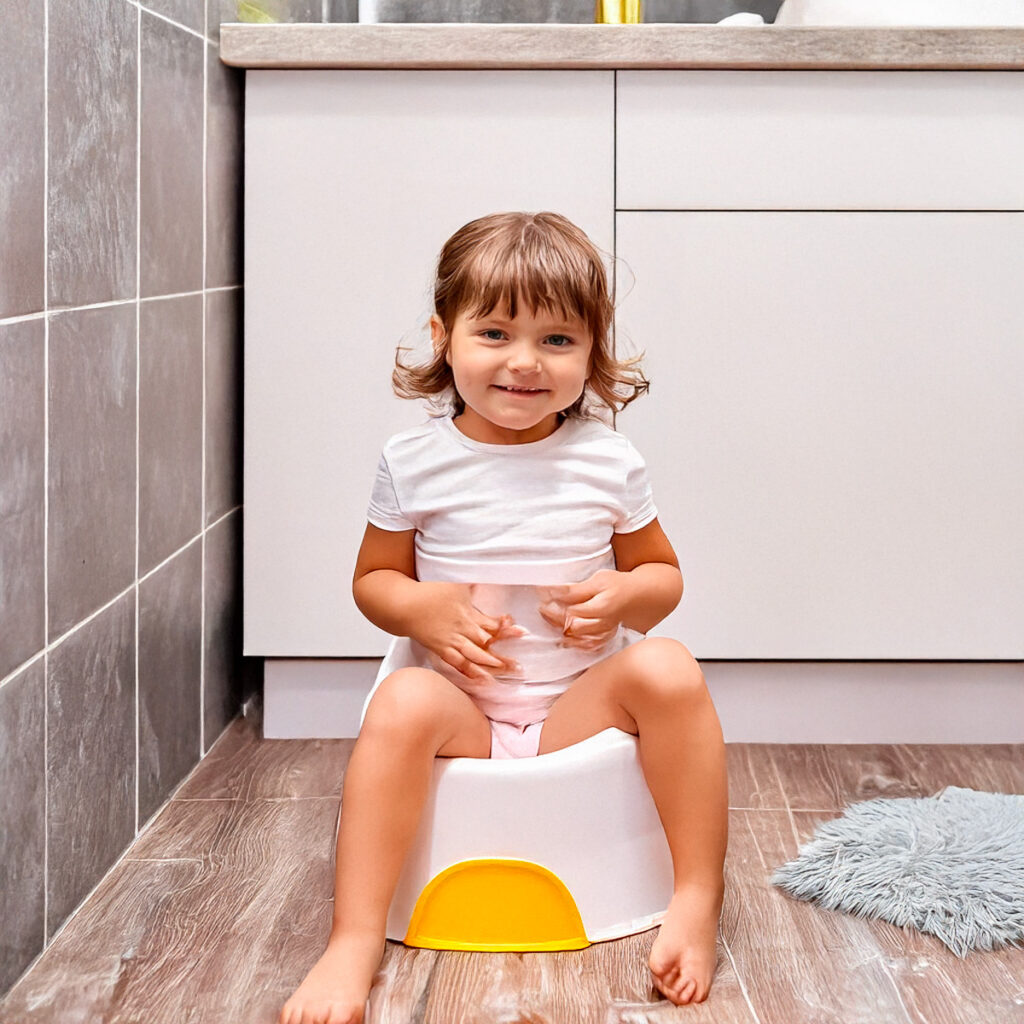
• Make sure your child is sitting comfortably: their feet should be flat on the floor and their knees should be higher than their bottom to encourage the abdominal muscles to contract. If you are using a toilet seat reducer, it is important that the child can rest their feet on a stool or a footrest, as their legs must not be left dangling.
• Make sure your child is comfortable, taking care when choosing the room or area where you place the potty.
• It is best to encourage the child to use the potty after meals, so as to take advantage of the bowel reflex associated with a full stomach (gastrocolic reflex).
• Teach your child not to rush, whilst taking care not to keep them on the potty for too long (no more than 10–15 minutes).
• Be patient and encourage progress: do not appear impatient or discouraged in the event of a setback or if the child soils their nappy (small amounts of faeces may naturally leak out if the rectum becomes too full).

 it
 fr
 es
 pl
 be-fr
 bg
 de
 el
 pt
 ro